
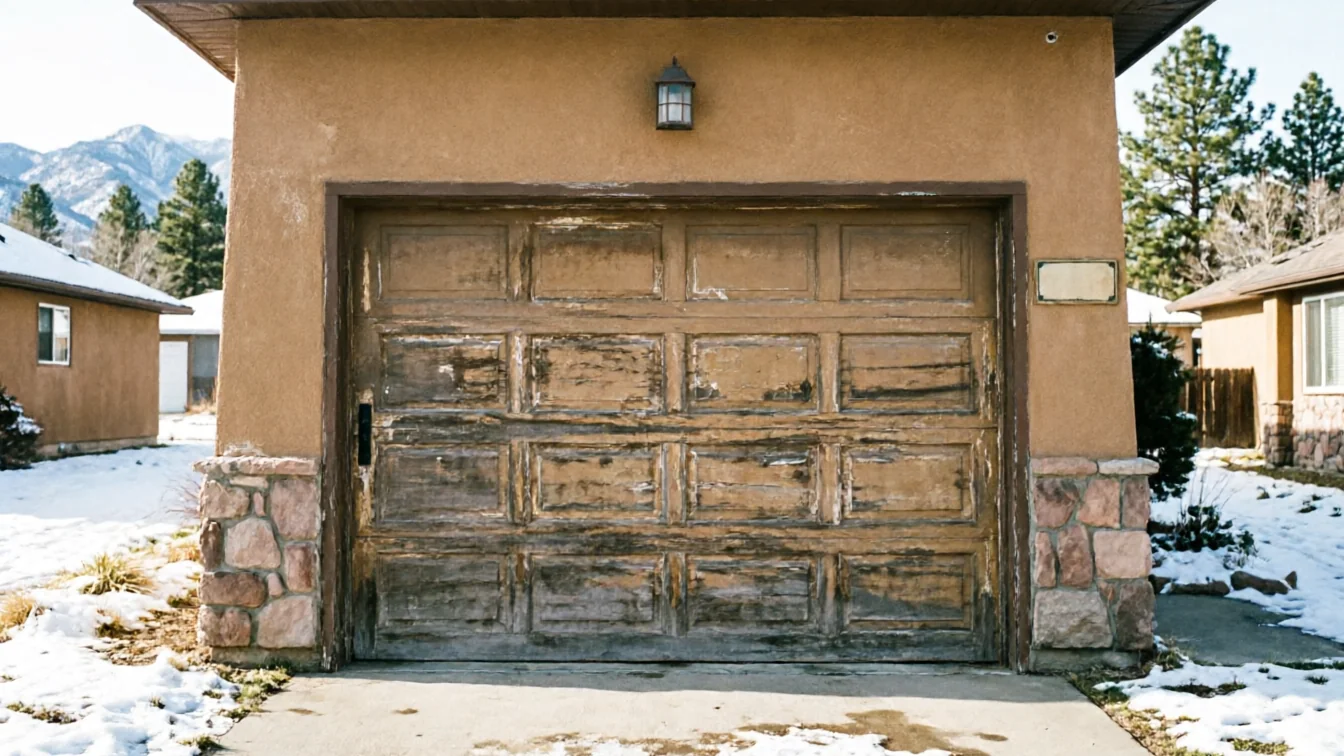
 When an Old Littleton Garage Door Still Has Life In It
Littleton homes built 1938-2005 carry original hardware into a severe cold climate.
Why a Door Goes Off Track in a Littleton Garage
Littleton homes built mostly between 1960 and 1977 run original track hardware into cold-climate stress. Here's why doors jump track and when it's past a DIY fix.
Local detail
When It Stops Being a DIY Job
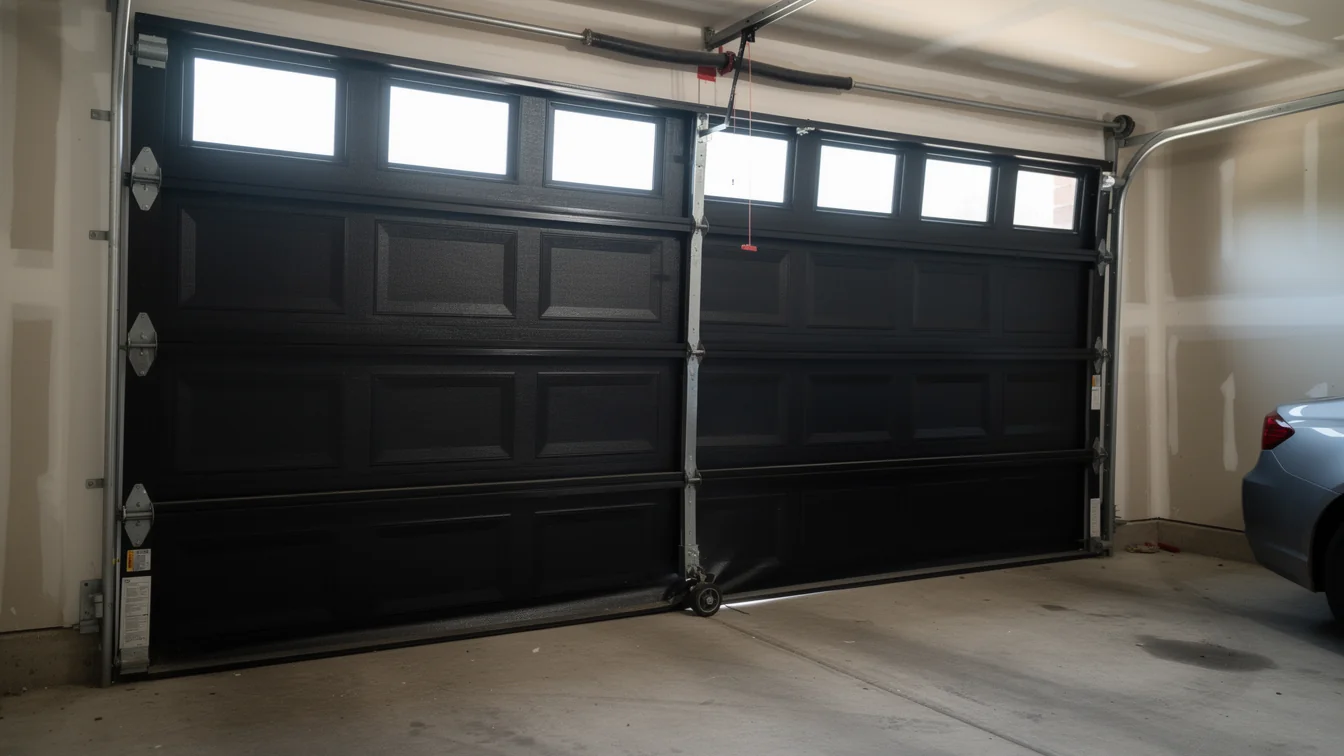
A door that's hopped its track usually started with something small: a roller worn down to the stem, a bent track flange, or a bracket that's worked loose from the jamb. If the door is still sitting square in the opening and you can see daylight evenly around the panel, you can sometimes walk the roller back into the track by hand with the opener disconnected. That's the limit of what a homeowner should try.
Past that point, you're dealing with cable tension and spring load, and that's where this stops being a weekend fix. A lot of the housing stock through this service area dates to the 1960s and 70s, which means the track hardware is often original - galvanized steel that's thinned and pitted over fifty-plus years, with mounting brackets screwed into framing that's shifted with the house. On that kind of hardware, forcing a roller back into a track that's already bent invites the whole assembly to let go, cable and all, while you're standing under it.
If the door is cocked in the opening, if a cable has come off the drum, or if you hear a spring under load, stop and call. We don't fix torsion springs over the phone with instructions - that's a job for someone standing in the garage with the right bars and clamps.
The area
What the Weather Here Does to It
This area sits in a cold, severe winter climate band, and that matters more for track alignment than most people think. Steel contracts in the cold. On an older track system - common given housing built mostly from 1938 through 2005 with a median around 1977 - the mounting brackets and track sections don't contract evenly with the framing around them. Over enough freeze-thaw cycles, lag screws back out a sixteenth of an inch at a time and a track that was dead straight in July is bowed by February.
Temperature swings also stiffen the lubricant in old rollers and hinges, so a door that used to glide now drags against one side of the track. Drag pulls a roller off its line faster than almost anything else we see. Add a slab that's heaved slightly from frost, which changes how square the opening sits relative to the track, and you've got a door that was fine for decades suddenly jumping track every few weeks.
This isn't a problem unique to any one street - it shows up across the older pockets of 1960s and 70s construction throughout the area, wherever the original track hardware is still in service.
What we find
What You Pay
We don't quote a track repair over the phone without seeing the door, because the range is wide. A door that's simply jumped a roller and needs realignment is a short visit. A door with a bent track section, a bracket pulled from rotted or shifted framing, or a cable that's come off the drum is a different job entirely, and if the track is bowed along its length rather than just dented at one point, replacing that section is usually cheaper than trying to hammer it straight.
What we can tell you without seeing the door: on housing from the 1960s and 70s era that makes up a lot of the stock here, it's common to find the track hardware is original to the house. Original brackets and track on a door that old are often past the point where a spot repair makes sense, especially if this is the second time it's come off the rail. We'll tell you straight if you're better off replacing the track assembly instead of patching it again.
How we work
The Problem
The core issue in a service area built out mostly between 1938 and 2005, with the bulk of that stock from the 1960s and 70s, is that original hardware was never designed to handle fifty-plus winters of freeze-thaw movement in a cold, severe climate. Track brackets loosen, steel fatigues, and slabs shift slightly under frost - none of it dramatic on its own, but together it's enough to walk a roller off the rail.
The honest limitation here: we can realign a track and tighten hardware, but if the framing behind the bracket has rotted or the track itself is bowed in more than one place, realignment won't hold. At that point you're paying twice if you keep patching instead of replacing. We'll always tell you which situation you're in before we start work, not after.
Questions
Common questions
Why does my garage door keep coming off the track in winter?
Cold temperatures contract the steel track and stiffen roller lubricant, which increases drag on one side of the door. On older hardware, common in housing built through the 1960s and 70s across this area, that drag is enough to walk a worn roller off the rail during a cold snap.
Can I push the roller back into the track myself?
Only if the door is sitting square and there's no sign of a loose cable or a spring under load. If the track is visibly bent or the door is cocked in the opening, don't force it - call us before you touch the hardware.
Is it the track or the whole door that needs replacing?
Depends on the damage. A dented spot in the track can sometimes be swapped for a short section. A track bowed along its length, or brackets pulled from old framing, usually means replacing the full track assembly rather than patching it.
Recommendation
You Might Also Like
More garage door guides for Littleton homeowners.
When an Old Littleton Garage Door Still Has Life In It
Littleton homes built 1938-2005 carry original hardware into a severe cold climate.
 What Littleton's Older Housing Stock Means for Your Garage Door
Littleton homes were built mostly between 1938 and 2005, many before insulation codes existed, and severe cold winters test old garage doors hard here.
 When a Spring Goes in Cold Weather: A Littleton Homeowner's Guide
Littleton homes built 1938-2005 face severe cold spring failures.
Ready when you are
Need a garage door sorted in Littleton?
Littleton Garage Door Pros repairs and installs garage doors, springs and openers in Littleton, CO and the surrounding area.