
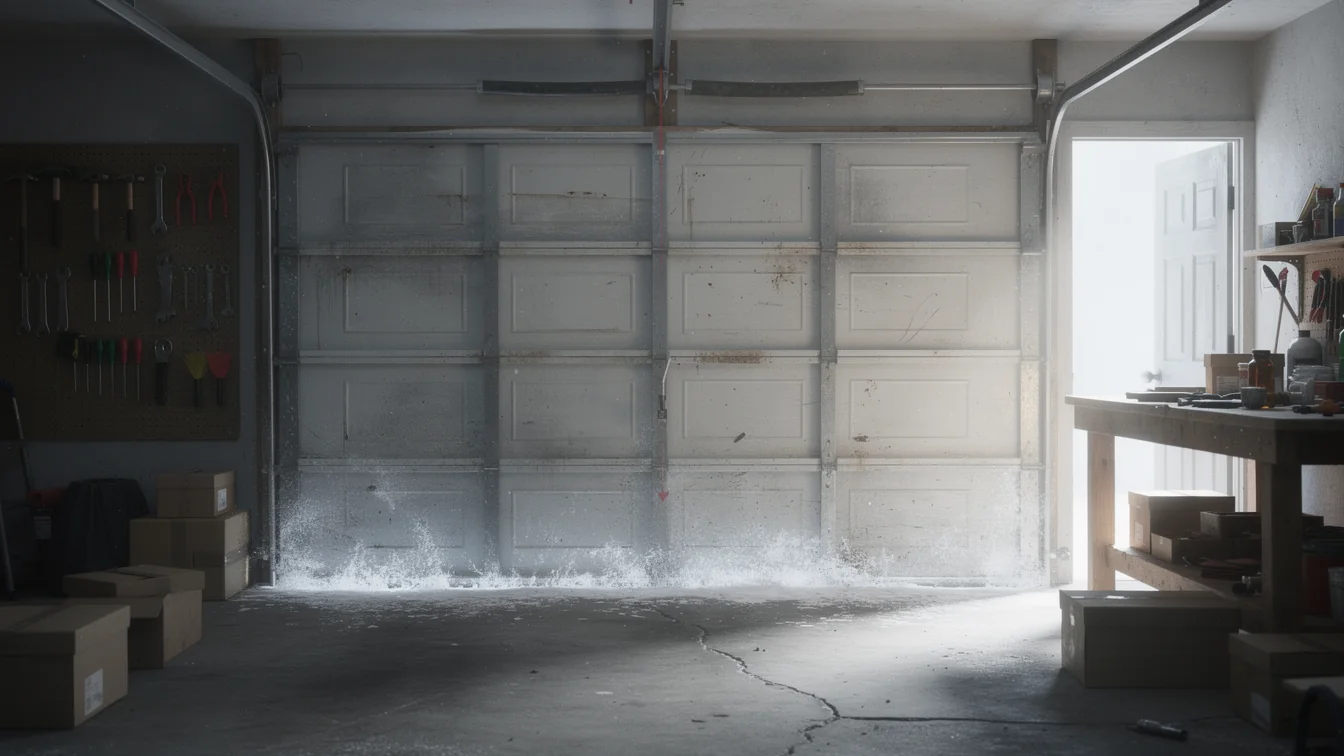
 What Littleton's Older Housing Stock Means for Your Garage Door
Littleton homes were built mostly between 1938 and 2005, many before insulation codes existed, and severe cold winters test old garage doors hard here.
When a Spring Goes in Cold Weather: A Littleton Homeowner's Guide
Littleton homes built 1938-2005 face severe cold spring failures. Learn when to call a pro, what winter does to older torsion hardware, and what drives cost here.
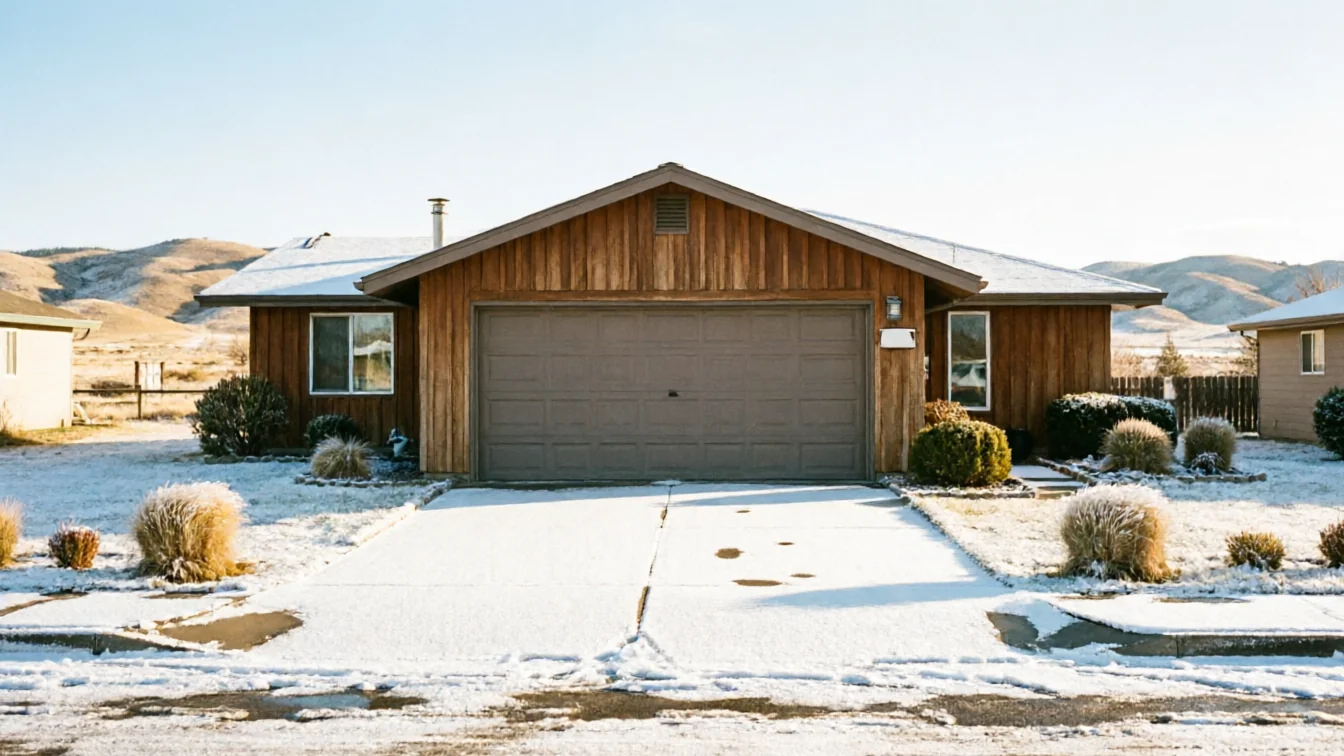
Local detail
When It Stops Being a DIY Job
If your door won't budge and you can see a gap in the coiled spring above the door, stop. That's a broken torsion spring, and torsion hardware under tension has put people in the ER trying to wind it back by hand. A lot of the houses in this area date to the 1960s and 70s stock common across our service area, and those original torsion setups are side-mounted and sized for doors that weigh less than what gets installed today. That mismatch alone is reason to call rather than guess at a replacement spring size.
What you can safely handle: a roller that's squeaking, a track that's slightly out of alignment with visible daylight at the bottom corner, or a sensor that's gotten knocked out of position. What you can't: anything involving the spring itself, the cables, or the drums at the top of the tracks. If the opener motor runs but the door doesn't move, that's almost always a broken spring too - the opener isn't built to lift the door's full weight alone.
One honest limit here: if your door was installed before the mid-1980s and the spring finally lets go, we're not always able to match the exact drum and cable setup on the shelf. Older torsion systems sometimes need a part ordered, which means a short wait even after the call.
The area
What the Weather Here Does to It
This area sits in a severe cold climate band, and that matters more for garage doors than people expect. Steel contracts in the cold, and a torsion spring that's already fatigued from age gets measurably stiffer and more brittle when the temperature drops. That's why the calls spike on the first hard cold snap of the season rather than spreading evenly through winter - the spring was already near the end of its life, and the cold is just what finishes it.
Houses built here between 1938 and 2005, with the bulk going up mid-century, often still have their original or first-replacement spring. A spring installed in a home built in the 1970s has had decades of temperature swings working against the metal. Add a cold morning where the door gets used right after a hard freeze overnight - garage unheated, steel contracted - and that's the exact moment a weakened spring gives out.
The practical upshot: if your door feels harder to lift by hand on cold mornings than it did in summer, that's not your imagination and it's not something to ignore until it fails completely. It's the spring telling you it's losing tension before it snaps.
What we find
What You Pay
We don't have a flat number to quote you here, because what a spring job costs depends on the size of your door, the spring type on it now, and whether the drums or cables need replacing alongside it - which is common on older hardware. What we can tell you is what drives the number: single vs. double door, one spring vs. a matched pair, and whether your setup is the older side-mounted torsion style that's harder to source parts for versus a newer standard configuration.
Households in this service area have a median income of $116,838, which is relevant mainly in that most homeowners here are weighing a repair bill against a house that's often decades old - meaning other original hardware (opener, tracks, cables) may be close behind the spring in needing attention. A spring call is rarely the only thing we look at once we're under your door.
The honest trade-off: if your opener is also original to a house from this era, fixing the spring without checking the opener's lift capacity sometimes just trades one failure for the next one. We'll tell you straight if that's what we're seeing before we leave.
How we work
The Problem
The core issue in this area isn't that doors fail - every door eventually does. It's that a large share of the housing stock here was built between 1938 and 2005, with most of it concentrated in the 1960s and 70s, and a lot of that original torsion hardware is still in service decades past when it should have been swapped. Across the 34 named areas in our service territory, from Columbine three miles out to Evergreen seventeen miles away, that same mid-century build pattern repeats - which means this isn't a one-house problem, it's a neighborhood-wide one.
Severe cold makes a tired spring fail faster, but the cold isn't the root cause - age is. A spring rated for roughly 10,000 cycles doesn't care what decade it is; it cares how many times that door has gone up and down. In a house built in 1965, that count is a lot higher than in one built in 1998.
We can replace the spring that broke. What we can't do is turn back the clock on the rest of the hardware that's the same age. If your cables, drums, or rollers are original too, replacing just the spring is a partial fix, and we'll say so rather than pretend it's a complete one.
Questions
Common questions
How cold does it have to get before a spring is at risk?
There's no single temperature that triggers it. It's less about one cold snap and more about a spring that's already aged - from a house built decades ago - finally giving out when steel contracts in a hard freeze. The severe cold winters typical to this area accelerate wear that's already underway rather than causing it outright.
My house was built in the 1970s - is my spring original?
It's possible, especially if you haven't had garage door work done before. A lot of the housing stock here dates to the 1960s and 70s, and original torsion springs from that era are well past the point where replacement should've happened. If you don't know the last time it was serviced, assume it's old.
Can I just replace the spring myself to save money?
We'd rather you didn't. A torsion spring under tension is dangerous to handle without the right bars and clamps, and older side-mounted setups common in houses here sometimes use drum and cable sizing that doesn't match what's sold at a hardware store. Call for this one.
Why does the opener run but the door doesn't move?
That's a classic sign the spring is broken. The opener motor isn't built to lift the full weight of the door on its own - the spring does that work. Once it snaps, the motor just spins without the counterbalance it needs.
Recommendation
You Might Also Like
More garage door guides for Littleton homeowners.
What Littleton's Older Housing Stock Means for Your Garage Door
Littleton homes were built mostly between 1938 and 2005, many before insulation codes existed, and severe cold winters test old garage doors hard here.
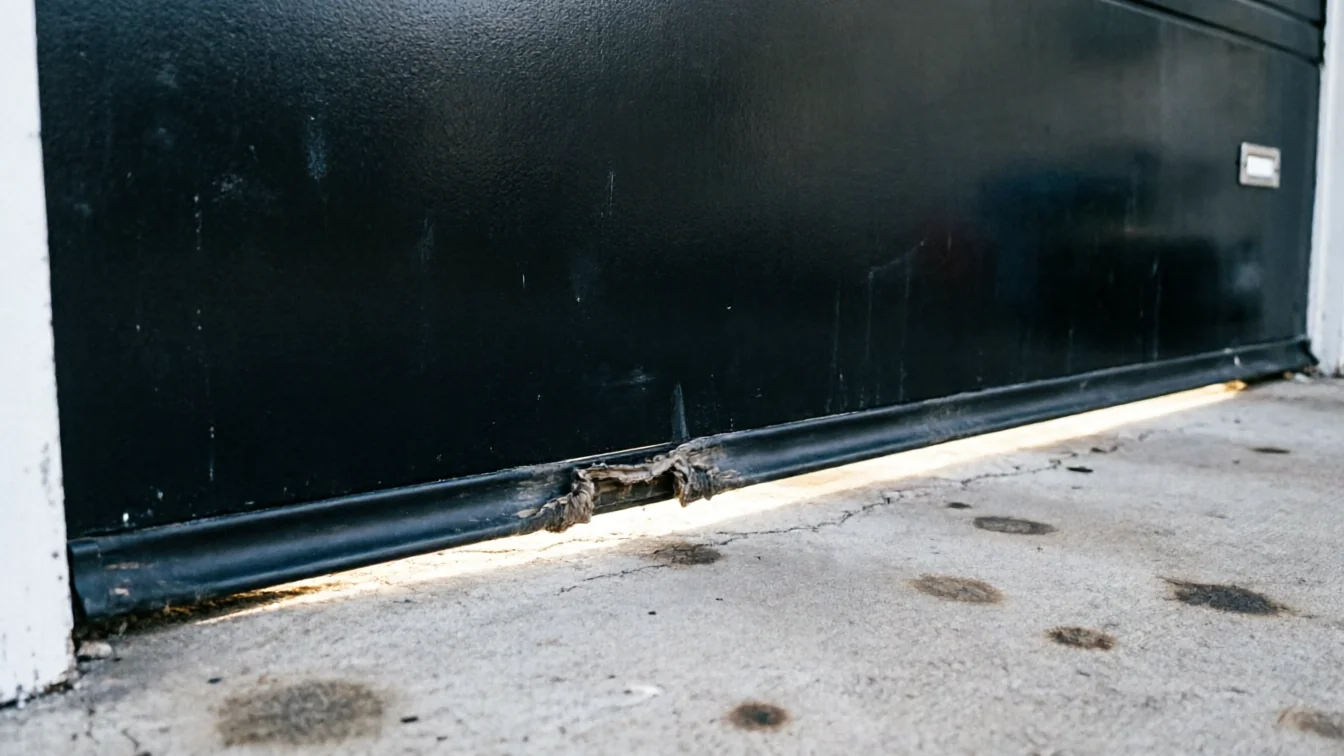 Weather Seals and Draughts in Littleton's Older Garage Doors
Littleton's 1960s-70s housing stock and COLD-severe winters mean bottom seals and weatherstripping fail differently here.
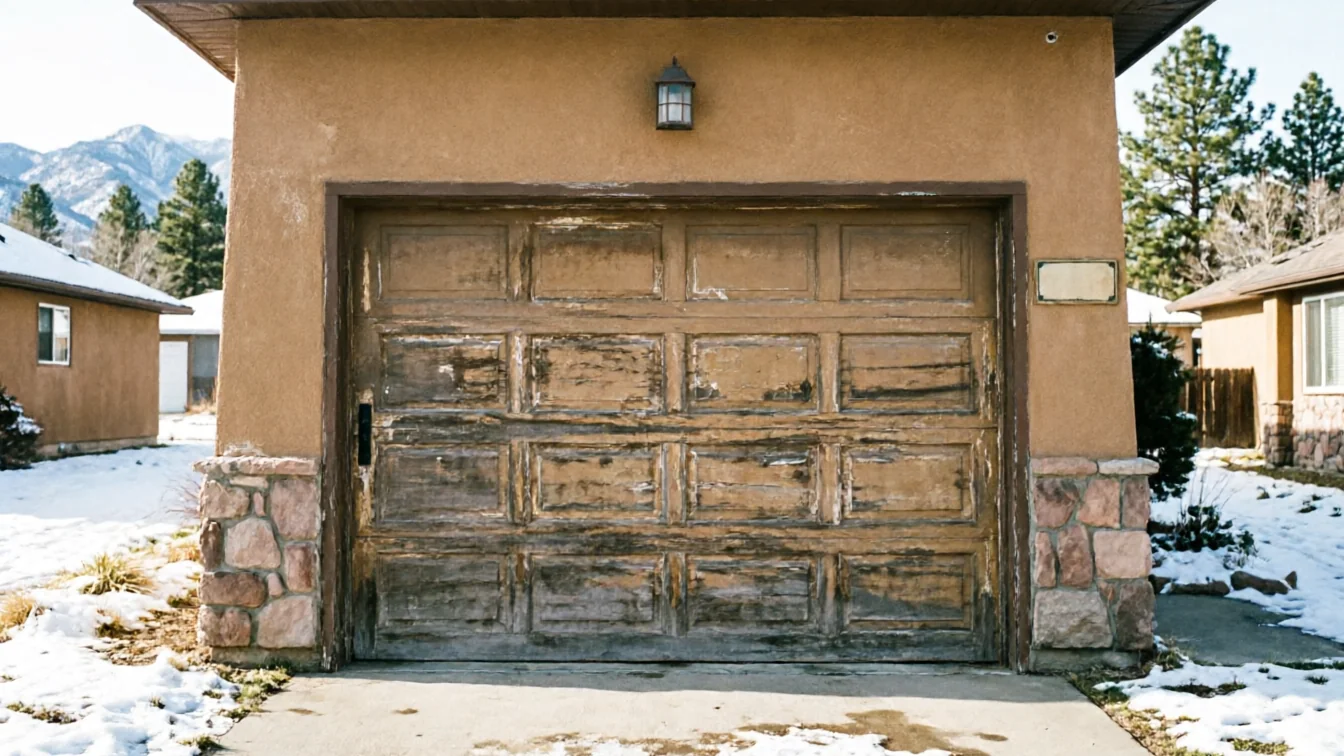 When an Old Littleton Garage Door Still Has Life In It
Littleton homes built 1938-2005 carry original hardware into a severe cold climate.
Ready when you are
Need a garage door sorted in Littleton?
Littleton Garage Door Pros repairs and installs garage doors, springs and openers in Littleton, CO and the surrounding area.