
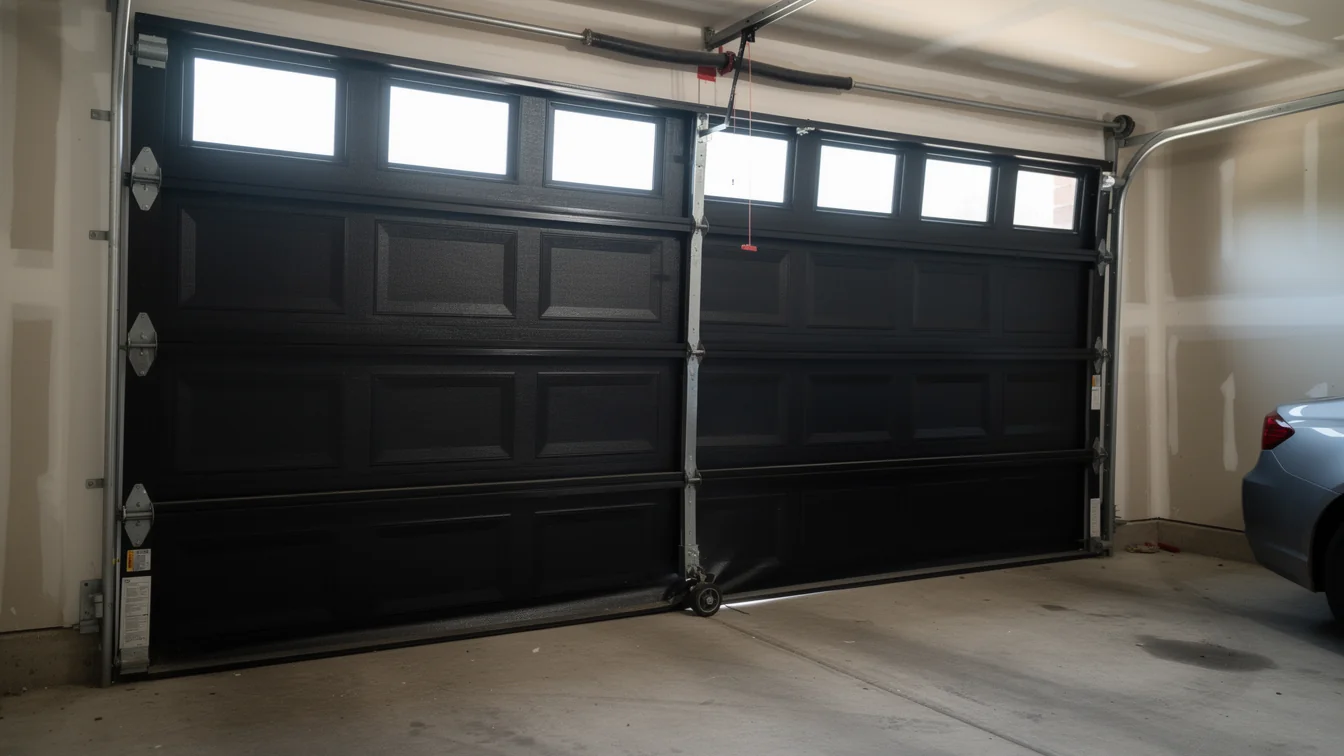
 Why a Door Goes Off Track in a Littleton Garage
Littleton homes built mostly between 1960 and 1977 run original track hardware into cold-climate stress.
What a Littleton Garage Door Tech Actually Checks First
Littleton homes mostly date to 1938-2005, median 1977. Here's what a technician checks first before calling it a DIY fix or a parts-order job.
Local detail
When It Stops Being a DIY Job
Most of the housing stock around here went up between 1938 and 2005, with the median build year sitting at 1977, and a lot of the 34 named areas we run calls in are still carrying 1960s and 70s stock. That matters because a door from that era isn't built like one off a shelf today. The torsion hardware is often side-mounted, the drums are narrower, and the cable drums wear in ways a newer center-mount system doesn't.
If your spring is original to a 1970s build, it's done more cycles than it was rated for, and the steel has fatigued in ways you can't see by looking at it. A technician checks the winding cone for rust pitting, the stationary cone bolts for stripped threads, and the shaft for play before touching the spring itself. If any of those three show wear, that's the line where a homeowner with a winding bar turns into a hospital visit. We won't walk a customer through winding a 45-year-old spring over the phone, and we tell people that straight.
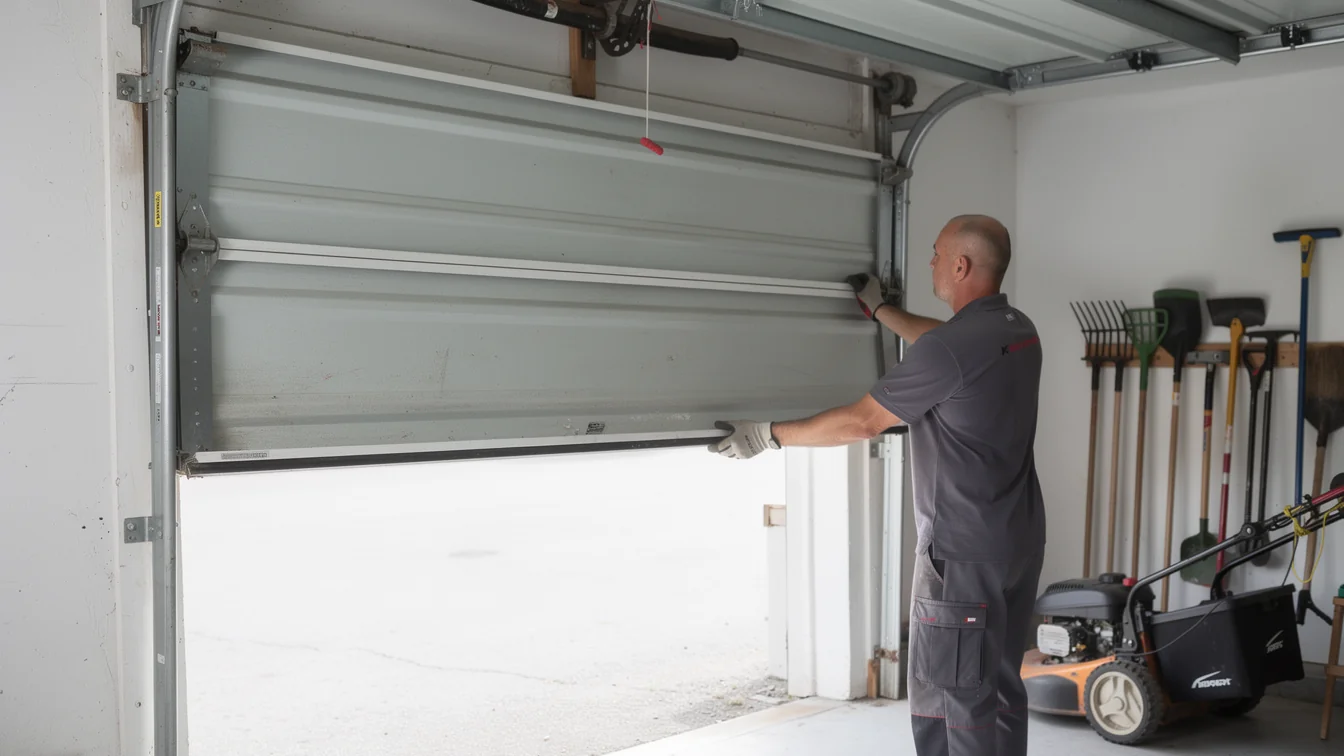
What you can safely check yourself: the photo-eye alignment, the weatherstripping at the bottom panel, and whether the door is binding on one track versus both. Those don't involve stored spring tension and won't put you in the ER.
The area
What the Weather Here Does to It
Littleton sits in a cold, severe climate band. That's not a label for a brochure - it changes what fails and when. Steel torsion springs lose a measurable amount of lift force as temperature drops, so a spring that was already marginal in October starts failing openers in January. Grease inside an older drum or bearing thickens in cold and makes the opener's motor work harder every single cycle, which is a common reason a door that opened fine all summer starts grinding or stalling once it gets cold.
On a door built to 1970s-era standards, the steel gauge is thinner than what goes into current panels, so cold-weather flex at the bottom panel is more pronounced, especially on a two-car door spanning 16 feet. That flex works bolts and hinges loose over a season, and it's the thing we check second, right after the spring.
We don't see hail or coastal corrosion issues here the way other climate bands do - this is a dry-cold problem, not a rust problem, for most of the service area. That's worth knowing because it means lubrication schedule and spring tension matter more than corrosion-proofing for most of the houses we visit.
What we find
What You Pay
We're not going to put a number here that isn't backed by something real, and we don't have a service-area price list to quote from. What we can tell you is what drives the number up or down on a call. A door that's original to a 1960s or 70s build often needs a part that isn't a standard stock size anymore - older torsion drums and some side-mounted hardware aren't the same dimensions as what ships on a current door, so sourcing that part can add time and cost versus a straightforward swap on a newer home.
The honest limitation: if your door is from that era and a drum or end bearing plate is cracked, we may tell you replacement of that section, or the whole door, makes more sense than hunting down a matching obsolete part. That's not an upsell, it's math - chasing a 50-year-old part sometimes costs more in labor hours than a new panel.
A technician gives you a number after looking at the actual hardware on your door, not off a phone estimate, because the age spread in this area (1938 to 2005) means two doors on the same street can need completely different fixes.
How we work
The Problem
The thing that catches most homeowners off guard is that the two issues above compound each other. A spring built in 1977 standards, run through decades of Colorado cold snaps, is already past where a newer spring would be in fatigue life. Add a cold morning and the force it needs to lift the door goes up right when the steel has the least to give. That's the call we get most in winter: opener straining, door barely lifting, owner assuming the opener motor is dying when it's actually the spring that's given out.
Across the service area's roughly 62,470 owner-occupied houses, a big share were built in that same mid-century window, which means this isn't a one-house problem, it's a pattern tied to when this part of the Denver area was built out. If you're closer in - Columbine Knolls two miles west, or out toward Ken Caryl five miles out - you're likely running the same era of torsion hardware as the rest of the older stock here.
What a technician checks first, in order: spring wind and cone condition, then cable fray at the drum, then track alignment, then opener force settings. Skipping straight to the opener is the most common misdiagnosis we see.
Questions
Common questions
My garage door opener strains in the morning but works fine by afternoon. What's wrong?
On older torsion hardware, cold steel loses lift force, so a spring that's marginal will struggle most right at the coldest point of the day. It's rarely the opener motor itself - we check the spring's wind and the cone condition before replacing any opener parts.
Can I replace a torsion spring myself on an older house?
We don't recommend it on a door from the 1960s-70s stock common here. The winding cones and stationary hardware on that era often show wear you can't assess without removing covers, and a spring under full tension can cause serious injury. We check the hardware condition first before anyone touches it.
Why would a part for my garage door be hard to find?
A lot of houses in this area were built between 1938 and 2005, with plenty from the 1960s and 70s. Drums, end bearing plates, and some track hardware from that era aren't always the same size as what ships today, so matching parts can take longer to source than on a newer door.
Is it the cold causing my door problems, or is something actually broken?
Often both. Littleton's cold, severe climate band thickens old lubricant and reduces spring lift force in winter, which exposes a spring or bearing that was already near the end of its life. The cold doesn't cause the failure, but it usually reveals it first.
Recommendation
You Might Also Like
More garage door guides for Littleton homeowners.
Why a Door Goes Off Track in a Littleton Garage
Littleton homes built mostly between 1960 and 1977 run original track hardware into cold-climate stress.
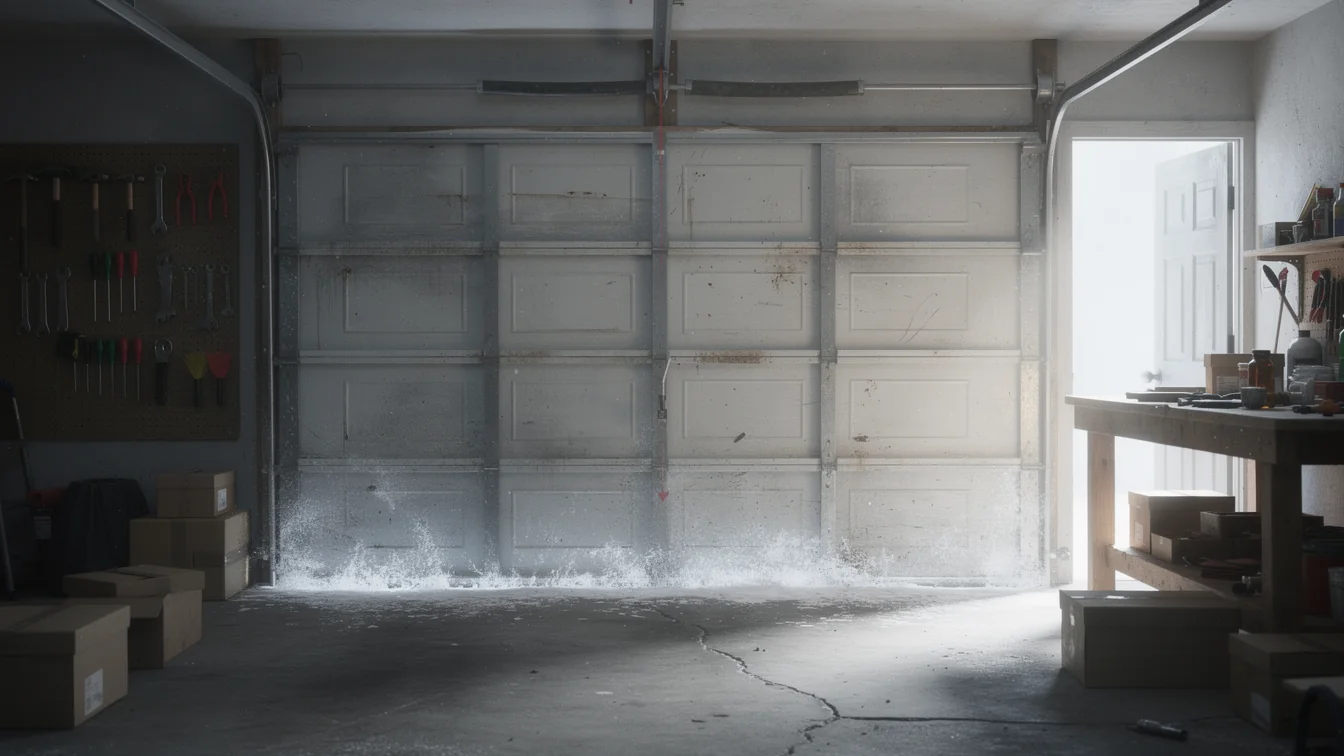 What Littleton's Older Housing Stock Means for Your Garage Door
Littleton homes were built mostly between 1938 and 2005, many before insulation codes existed, and severe cold winters test old garage doors hard here.
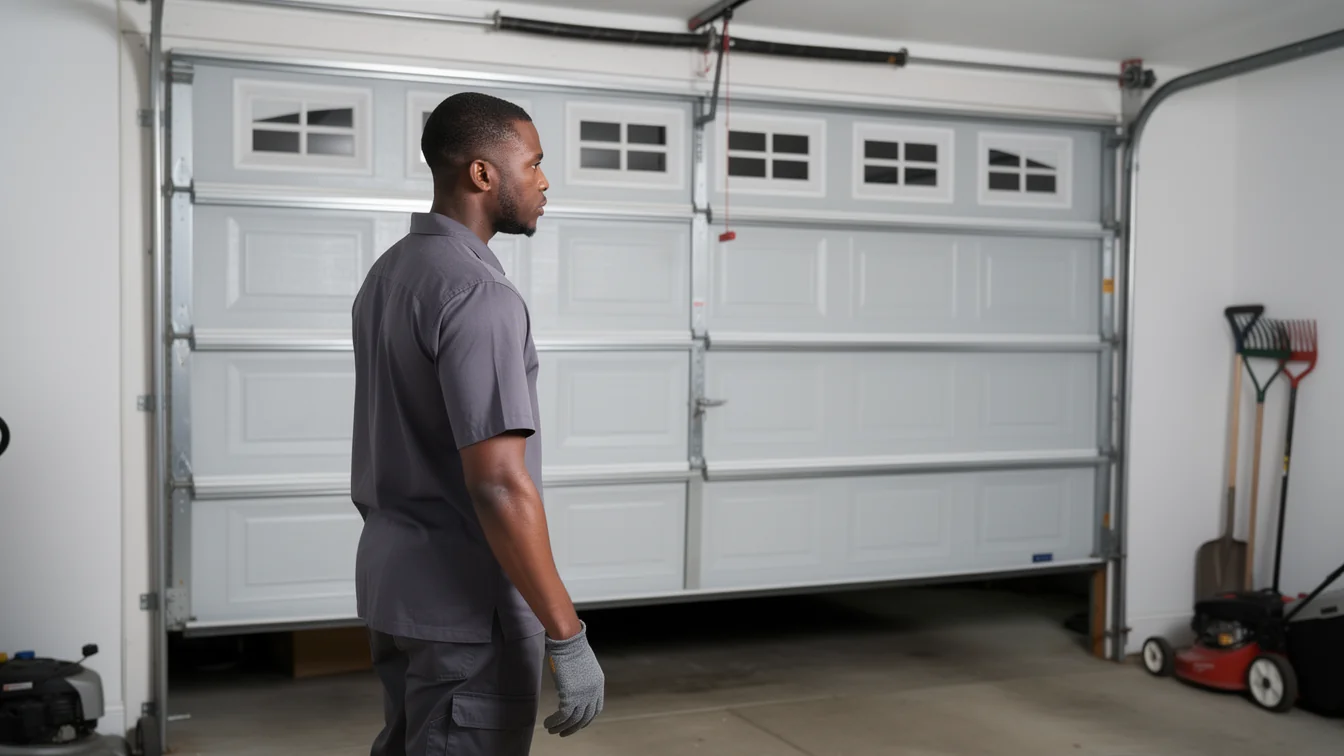 The Noise Your Garage Door Is Making Isn't Random
What a grinding, popping, or screeching garage door really means in Littleton homes built mostly in the 1960s and 70s, and when it's past a tune-up.
Ready when you are
Need a garage door sorted in Littleton?
Littleton Garage Door Pros repairs and installs garage doors, springs and openers in Littleton, CO and the surrounding area.