
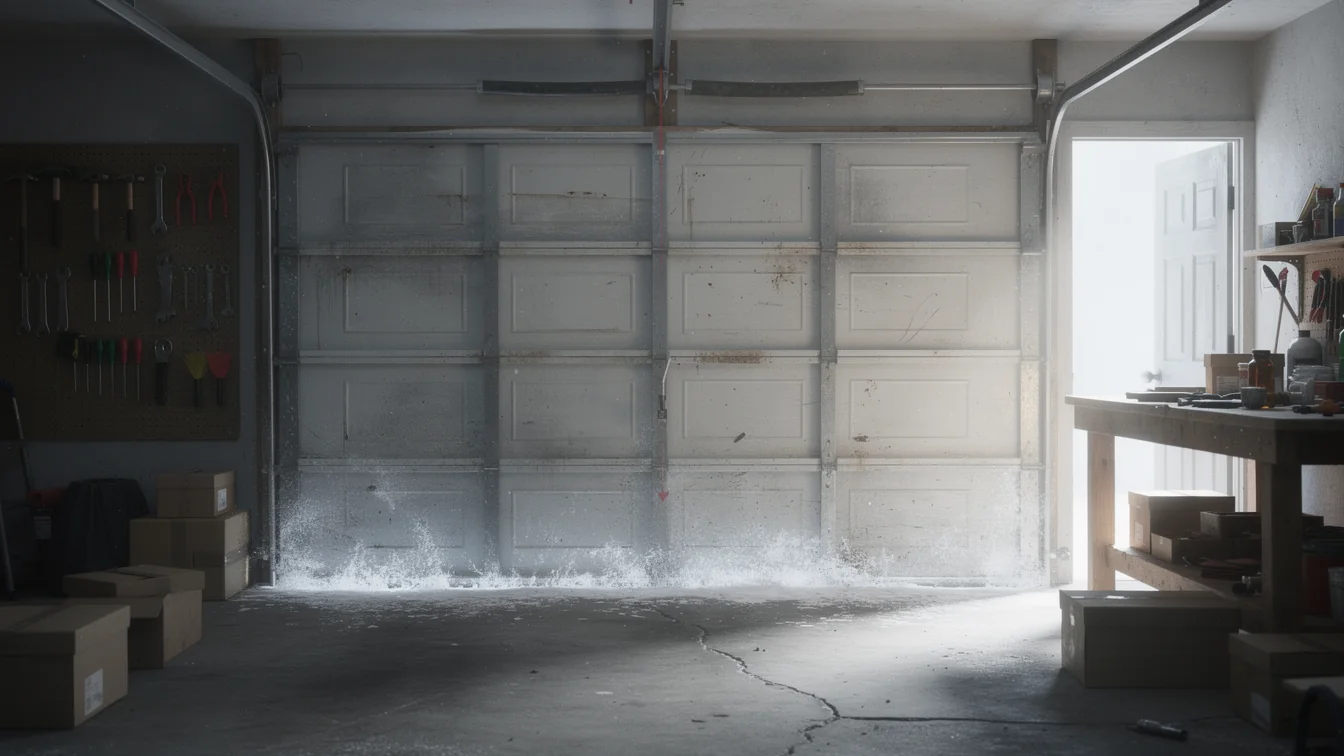
 What Littleton's Older Housing Stock Means for Your Garage Door
Littleton homes were built mostly between 1938 and 2005, many before insulation codes existed, and severe cold winters test old garage doors hard here.
Weather Seals and Draughts in Littleton's Older Garage Doors
Littleton's 1960s-70s housing stock and COLD-severe winters mean bottom seals and weatherstripping fail differently here. What to check, what it costs, and when to call.
Local detail
When It Stops Being a DIY Job
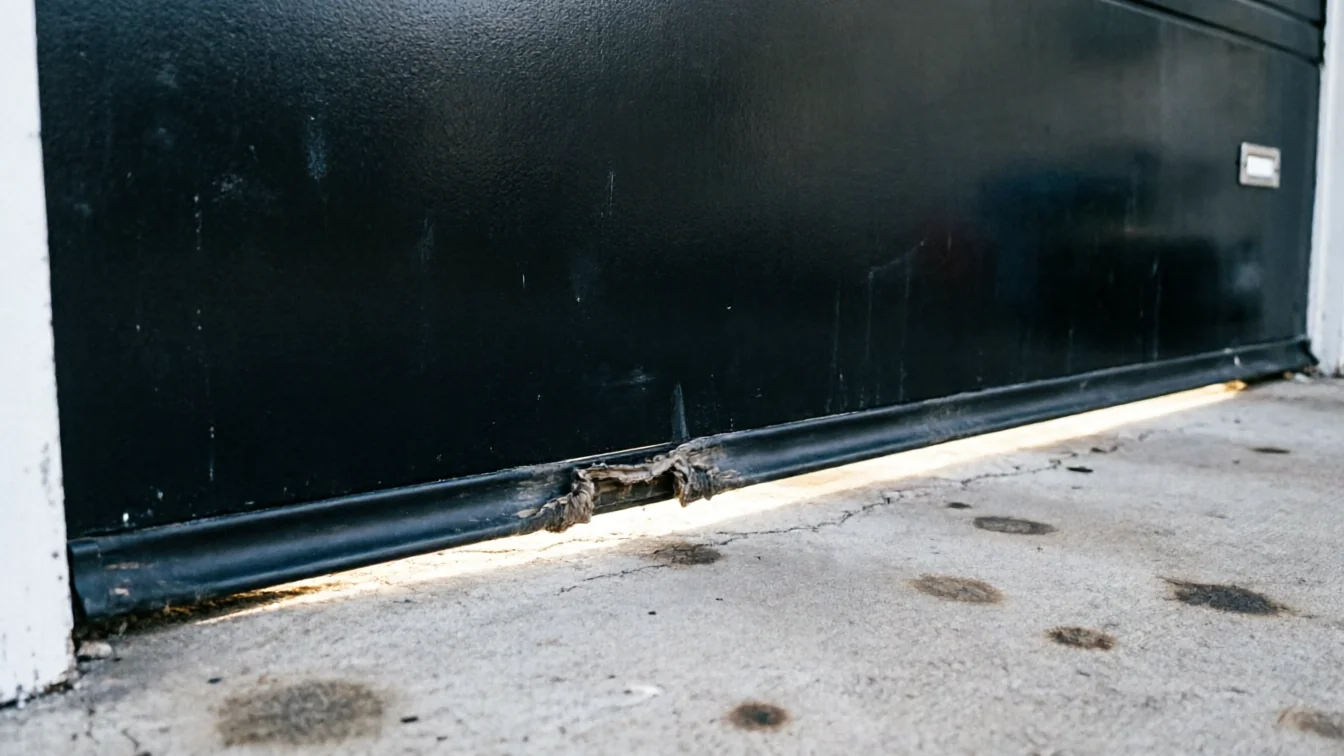
Swapping a bottom seal is a reasonable weekend job on a door built in the last fifteen years, where the track is a standard width and the seal snaps into a retainer. That's not most of what's out there. Housing in this service area was built between 1938 and 2005, with the median sitting around 1977, and a lot of those doors still have their original tracks. On those, the seal channel is often a non-standard width, the retainer is rusted into one shape, and pulling it out cracks the aluminum.
That's the point where it stops being a trip to the hardware store. If the seal keeps popping out after you reseat it twice, the channel itself is bent, not just worn. If you see daylight along the sides of the door and not just the bottom, the stop molding has shrunk or warped - a seal won't fix that. And if the door is sagging slightly at one corner, draughts are a symptom, not the problem; a seal swap on a sagging door buys you a season at most.
We'll say plainly: if your door is from the 60s or 70s and the track is bent or badly rusted, a new seal is a patch, not a repair. We'd rather tell you that up front than sell you a part that fails again by spring.
The area
What the Weather Here Does to It
This is COLD-severe climate territory, which means the seal isn't just keeping out a draft - it's holding back repeated freeze-thaw cycles that work on rubber and vinyl differently than a mild winter would. A bottom seal that's gone stiff doesn't flex to meet the slab anymore; it just sits there with a gap under it, and that gap is where meltwater gets in, refreezes overnight, and starts lifting the seal track away from the door.
On the older stock built through the 1960s and 70s that makes up most of what we see across the service area, that cycle has had decades to do its work. The aluminum retainer corrodes, the fasteners back out, and the seal starts letting cold air sweep along the garage floor rather than stopping at the threshold. You'll notice it as a cold spot near anything stored against that wall, or a draft that reaches the door into the house if the garage is attached.
Weatherstripping on the sides and top does similar work but fails on a different schedule - usually sun and UV first, cracking it before cold does. Either way, the fix only holds if the track underneath it is straight. A new seal pressed into a bent channel will separate again the first hard freeze.
What we find
What You Pay
We don't have a flat number to give you here, because what it costs depends on what's actually failing - a straight seal swap on a standard track is a different job from replacing a bent retainer or correcting a track that's pulled away from the jamb. What we can tell you is what drives the cost in this area specifically: doors from the 1960s-70s building wave often take a seal width that isn't the common retail size, which means it's not something we always have on the truck for every call.
With 62,470 owner-occupied houses across this service area and most of them built well before current seal standards existed, we order non-standard sizes more often than you'd think. That can mean a short wait on parts rather than a same-visit fix, and we'd rather tell you that than promise a turnaround we can't guarantee.
The honest trade-off: paying for a proper track correction alongside the seal costs more up front than just pressing in a new seal, but a seal alone in a bent channel is money you'll spend again next winter. We'll tell you which one your door actually needs before we quote anything.
How we work
The Problem
The core issue isn't that seals wear out - every seal does, everywhere. It's that this area's housing stock, mostly built across the 1960s and 70s with a long tail running to 2005, paired with a COLD-severe climate, puts seals through more freeze-thaw cycling than they were ever rated for, on tracks that are old enough to have shifted out of true.
Across the neighborhoods we work - from Columbine Knolls and Marston a few miles out to Fort Logan and the areas toward Sheridan and Englewood - we see the same pattern: a seal that looked fine in October is letting a visible draft through by February, because the real failure point is the track geometry underneath it, not the rubber itself. Treating the symptom without checking the track is why so many seal jobs don't last.
The fix that actually holds is checking track alignment first, then matching the seal to the door's actual channel width rather than the nearest size on the shelf. It's slower than a five-minute seal swap, but on a door this age, in this climate, it's the difference between a fix that lasts one winter and one that lasts several.
Questions
Common questions
Why does my garage door seal keep failing every winter even after I replace it?
On older tracks - common in this area's 1960s-70s housing - the channel holding the seal has often bent or rusted out of shape. A new seal pressed into a warped channel separates again once freeze-thaw cycling starts working on it. The seal isn't the real failure point; the track underneath usually is.
Is weatherstripping or a bottom seal the bigger source of draughts?
Depends on your door's age. Bottom seals fail from freeze-thaw and ground moisture, which hits hardest in a COLD-severe climate like this one. Side and top weatherstripping tends to fail from UV exposure first. Check both - a draft that reaches into an attached garage is often coming from the sides, not just the bottom.
Can I just buy a seal at the hardware store for an older door?
Sometimes, but houses built through the 1960s-70s often have track widths that don't match the common retail seal size. If it doesn't seat flush, it'll pop loose by the first hard freeze. We don't always carry every non-standard size on the truck, so some jobs mean a short parts wait.
Recommendation
You Might Also Like
More garage door guides for Littleton homeowners.
What Littleton's Older Housing Stock Means for Your Garage Door
Littleton homes were built mostly between 1938 and 2005, many before insulation codes existed, and severe cold winters test old garage doors hard here.
 When a Spring Goes in Cold Weather: A Littleton Homeowner's Guide
Littleton homes built 1938-2005 face severe cold spring failures.
 What Happens to Your Opener When the Power Goes Out in Littleton
How Littleton's 1960s-70s housing stock, cold-severe winters, and grid-dependent openers combine to leave garages stuck shut when the power cuts out, and what actually helps.
Ready when you are
Need a garage door sorted in Littleton?
Littleton Garage Door Pros repairs and installs garage doors, springs and openers in Littleton, CO and the surrounding area.